

Your GenAI copy might be fine, but that's beside the point. Readers just hate it for the AI-ness of it all. Here's how they can tell you didn't write it yourself.
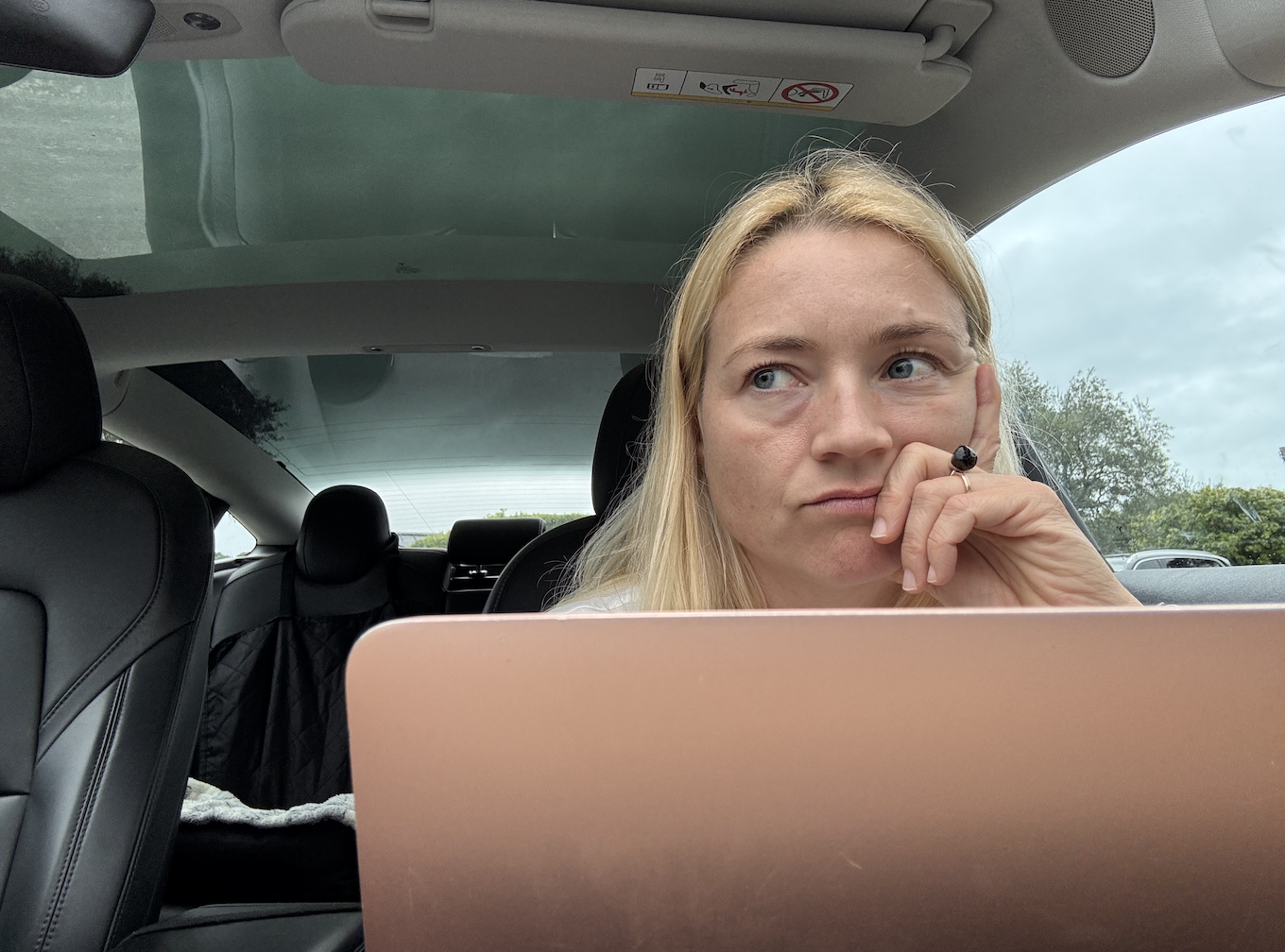
Reenactment: The human author trying to finish this article before school pick up
You can feel it almost immediately. The polished LinkedIn post. The perfectly structured blog. The thought leadership article that promises to “unlock the power of authentic storytelling in today’s fast-paced digital landscape.” Every sentence flows seamlessly into the next—smooth, balanced and relentlessly polished. It’s not badly written, it’s strangely empty.
50% of consumers can spot AI-generated copy. And if readers think you’ve used AI, they’ll see your brand as impersonal (25%), untrustworthy (20%), lazy (20%) and uncreative (19%).
And get this – the AI copy could be fine. When comparing two blogs where the authors were anonymous, just over half (56%) of respondents preferred the AI-written version to the human one. But as soon as the readers found out who wrote what, the preference flipped. Just the fact of it being AI is the issue. AI-generated content says to your reader, “I didn’t care enough to put the effort in.” That doesn't mean AI has no place in the content process. We use AI a lot at WFB, just never to actually write stuff.
This is the start of a trend that’s only likely to embed further – in 2025, only 58% of consumers trusted content written by GenAI, compared to 72% just two years before. The up and coming generation is also much less into AI. Comparing the AI to a human-written article, respondents aged 19-24 reversed that average, preferring the human-authored one. (Disclaimer: both human and AI versions were, objectively, badly written. I’d love to see this study repeated with excellent examples of copy.)
So yes. All interesting stats, but what do they meeeaan? Here are my key takeaways:
The major signs of AI writing are actually just… bad writing. So no change there, really: your marketing needs great writing. Here’s what we see in GenAI copy a lot.
When things are so vague and broad they become meaningless, like so:
Wait, wait. Shouldn’t marketing be promotional? Sure, we’re promoting stuff, but our readers have highly calibrated bullshit meters. Big-noting your product or service is a very efficient way to get ignored. And AI is very good at that kind of language.
Blanket statements that prioritise brevity over actual content.
Statements that apply to everyone, and therefore no one, are just…boring. These sentences are so frictionless, they slide through readers’ brains. The Muzak of writing.
You know what I mean. It’s like when you’re not really sure what you’re talking about, so you Format Everything. You bold words in the middle of sentences to make things feel significant, when they are not.
And oh, here’s a statement formatted to feel really important – a mic-drop sentence, but it’s only sort of fine.
AI was trained on human writing. And most human writing isn’t all that great. AI writing was also refined using human feedback. It means GenAI copy sounds polished and insightful, without any actual insight. It does that by wheeling out well-trodden phrasing and patterns. I call them ticks – they’re a neat little red flag to readers.
(Here’s something funny. I tried oso hard to get GenAI to write something without these ticks. Here’s its best attempt: “Writing that sounds polished. Writing that sounds balanced. Writing that sounds intelligent. The result is a machine that’s very good at producing competent prose.” Seriously though.)
Anyway, here are some common AI ticks.
Fake reveals
‘Quietly’, to mean ‘subtly’
The need for three
Inflated significance
Comparisons because they sound sophisticated
Short sentences and line breaks for added draaaama
Nobody buys running shoes.
They buy a version of themselves.
A healthier version.
A stronger version.
A version that finally sticks to the plan.
The adverb death spiral
I’ve already talked about how the new era of AI means marketing needs to grow a pair and send out more interesting work. The same goes for us writers. No more relaxing into old patterns – AI already has the mediocre copy covered, so you need to do something better. We also need to show the human cared enough to think about the reader, and write for them. And funnily enough, these are the things that make truly great copy anyway:
The more personal and specific to your reader you can get the better. It means you can speak to their fears, their lives, their desires – it's the bedrock of persuasion, and a real sign of humanity. It's only possible when you have only one person you're writing for. Yes, even if you're writing for a mass audience, every bit of writing needs just one (1) reader in your mind.
In Lorde’s Royals, the rhythm of the lyrics is destabilising. She sets up a pattern, and then breaks it. Consider the pair of lines that open the song:
I’ve never seen a diamond in the flesh / I cut my teeth on wedding rings… in the movies.
That bit at the end, ‘in the movies’, is rhythmically unexpected. It makes the line a whole extra bar longer than the one before. You’d be hard pressed to get AI to produce intentionally lopsided copy.
See how I wrote about that one bit of one line, in one Lorde song? Specificity gives stories truth and texture. Something that helps people connect the dots of bigger concepts. It’s also a peek into my brain and my life experiences – something I have. You know, because of the human thing.
GenAI copies existing language norms. Writers create new ones. For example, at some point, we all decided that “begs the question” can mean “raises the question” (it didn’t used to). Or that “less” can be used in place of “fewer” (don’t tell my dad). Or that nouns can be used as verbs (“that’s just how we internet”). AI will figure out how to copy that eventually, but your new inventions will make your writing surprising, interesting and obviously human.
So, revel in language. Muck around with it. Break it, even. As long as you keep your audience in mind, You! Don’t! Need! Grammar! Rules!
I find pratfalls funny. I think billionaires shouldn’t exist. I don’t get the point of luxury handbags. I think narcotics should be decriminalised. I like musicals.
My humanness gives me a point of view, one that people will inevitably disagree with. But that’s what AI can’t do. It wants to be balanced, conciliatory and comprehensive. Us humans, we’re biased. We cherry pick details to support our side. I’m not saying we should lean into being bigots, but having a point of view is kind of the only point of writing.
Maybe you’ve made it this far. Maybe you put this into Copilot to get a summary (efficient, but you missed out on the jokes). Either way, you’ll have gotten my point. As AI gets more ubiquitous, human weirdness will become more important. And luckily you are just that!
Here’s what we should be doing as creatives, creators and communicators:
Or, and forgive the sales pitch, you could pay some money to some writers to do all that hard work for you. Shall we chat? Here's my Calendly link.

The lead copywriter and creative director at Words for Breakfast. She spends much of her time working with the copy writing team across a variety of projects.


